

Notice of lease modification in Québec: deadlines, mandatory content and a model notice
Legal deadlines, mandatory content, delivery and tenant replies: a landlord's guide to the notice of lease modification in Québec. Let Urbanix handle renewals.

Owners
Full managementLeasingRent collectionMaintenance and repairsAccountingTAL casesPlex managementMulti-unit buildingsPricingRent increase calculatorApartments
Apartments for rentTenants
Maintenance requestEmergenciesMy leaseDocuments and RL-31Urbanix
AboutBlogContact and quoteFrançaisJuly 1st starts in winter: for a lease ending June 30, the notice of modification goes out between late December and March 31. Then come showings, the move-out inspection, cleaning and the key handover, with a legal duty to deliver a clean, habitable unit.
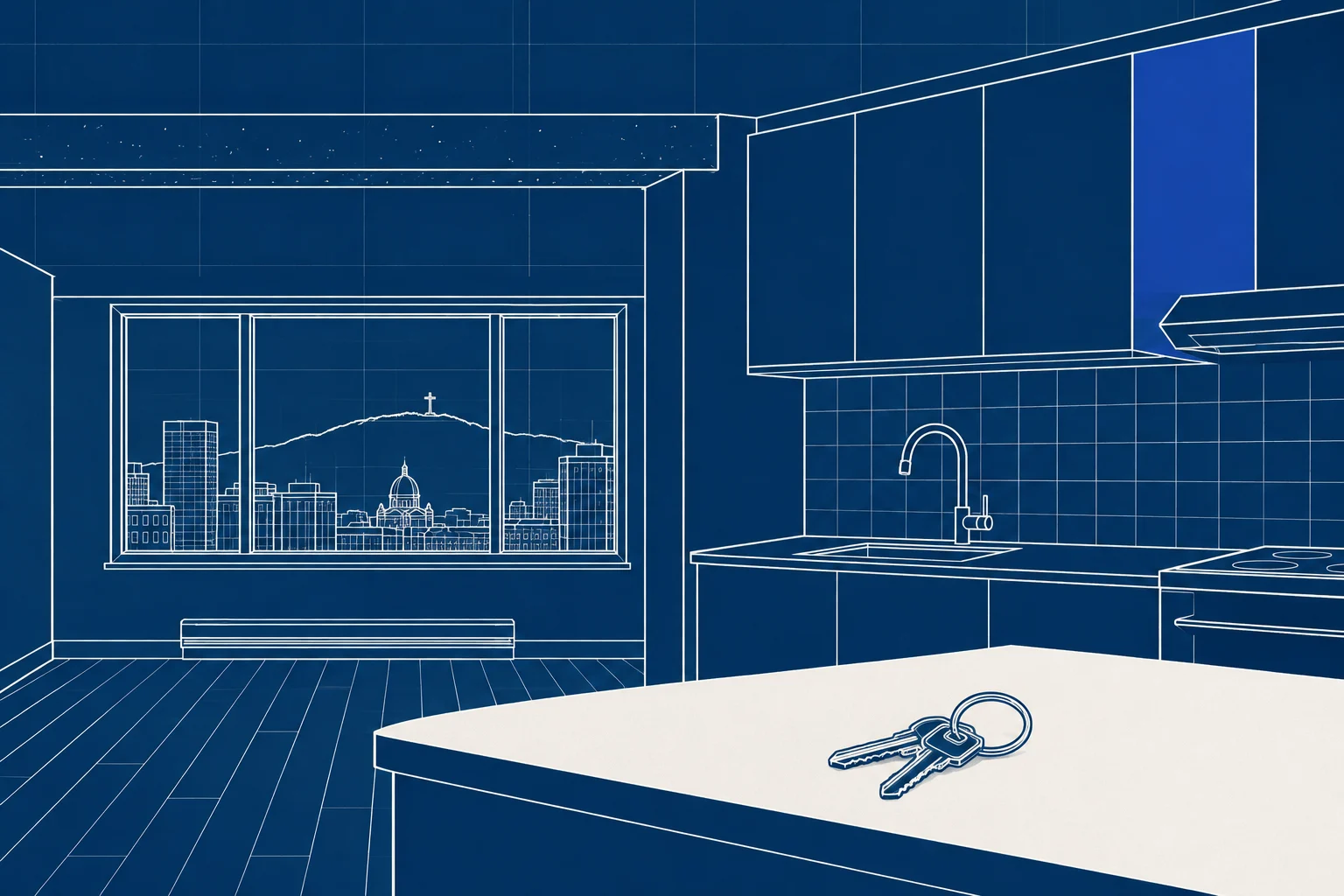
In Montréal, most residential leases end on June 30 and the next one starts on July 1st. Between one tenant moving out and the next moving in, there are often only a few hours. Anything not settled beforehand (notices, inspection, repairs, cleaning, keys) gets settled that day, under pressure. Here is the timeline we recommend to owners of plexes and small buildings.
The timeline starts in December. For a 12-month lease ending June 30, the tenant must receive the notice of modification between late December and March 31. Replies come in during spring, vacated units get rented in April and May, and June is for inspections, repairs, cleaning and key logistics.
Here are the steps, in order:
For notice periods in detail, see our article on lease renewal notice deadlines in Québec.
As soon as the tenant gives notice that they are not renewing, they must allow showings and signage (art. 1930 C.C.Q.). They can still refuse a visit before 9 a.m. or after 9 p.m., and refuse any visit if the landlord cannot be present (art. 1932). Agreeing on fixed time slots avoids friction.
A few practical rules:
We run this process for our clients as part of our apartment leasing service in Montréal.
An inspection in early June leaves three or four weeks to order parts and book trades. Done on June 30, the same inspection finds problems too late: the new tenant arrives the next day, and the unit must be delivered in a good state of repair of every kind (art. 1854 C.C.Q.).
The pre-move-out inspection requires 24 hours’ notice (art. 1931). On site, check:
| Item | What to look for | Typical fix lead time |
|---|---|---|
| Walls and ceilings | Holes, water stains, paint touch-ups | Book the painter early |
| Floors | Deep scratches, swollen boards, tile grout | Depends on the material |
| Plumbing | Leaks under the sink, taps, toilet, slow drains | Book the plumber early |
| Electrical | Outlets, switches, light fixtures, panel | Electrician |
| Doors and windows | Closing, locks, screens, cracked panes | Locksmith or glazier |
| Supplied appliances | Working order, door seals, cleanliness | Technician |
| Smoke alarms | Present, manufacture date, working | Right away |
| Balcony and stairs | Sturdiness, guards, rotten boards | Carpenter |
Also note what counts as normal wear. At the end of the lease, the tenant returns the unit in the condition received, but is not liable for decay, normal wear and tear, or superior force (art. 1890 C.C.Q.). Without a move-in report or photos, the tenant is presumed to have received the unit in good condition.
On June 30, do the move-out inspection with the tenant, take dated photos and collect every key. On July 1st, the unit must be clean and habitable when the new tenant arrives. Have someone reachable all day: the surprises (missing key, leak, unit full of belongings) show up on that day.
Re-keying between tenants is good security practice, especially if not every key came back. Book the locksmith ahead of time: on July 1st, demand far exceeds supply.
Keep a cleaning crew available between move-out and move-in. Even careful tenants rarely leave a unit ready to hand over. The Civil Code is clear: the landlord delivers the unit in a clean condition (art. 1911 C.C.Q.).
The landlord must deliver the unit in a good state of repair, habitable and clean (arts. 1854, 1910 and 1911 C.C.Q.). A clause in which the tenant acknowledges that the unit is habitable has no effect. A unit unfit for habitation can be neither offered nor delivered, and the tenant may refuse it.
In practice:
| Obligation | Source | If it is not met |
|---|---|---|
| Good state of repair of every kind | art. 1854 C.C.Q. | Tenant remedies: performance, rent reduction, damages |
| Good habitable condition, at delivery and throughout the lease | art. 1910 C.C.Q. | Any contrary clause has no effect |
| Clean condition at delivery | art. 1911 C.C.Q. | Tenant can apply to the TAL |
| Safety and sanitation standards | art. 1912 C.C.Q. and municipal by-law 03-096 | Same remedies as a breach of the lease, notice from the City |
| No delivery of a unit unfit for habitation | arts. 1913 and 1914 C.C.Q. | Tenant may refuse; the lease is resiliated by operation of law |
If the unit will not be ready on time, contact the new tenant before July 1st and put any arrangement in writing (later handover date, rent adjustment, temporary lodging). The exact consequences of late delivery depend on the facts.
A unit left vacant between tenants still needs heat: Montréal’s by-law on the sanitation, maintenance and safety of dwellings (03-096) sets a minimum of 15 °C in a vacant unit during the cold season. This matters most for units that stay empty into the fall.
The City of Montréal publishes a moving guide covering moving truck parking permits, bulky item collection, ecocentres and address changes. For households that have not found a place to live by July 1st, the City’s Opération 1er juillet offers relocation help, reached by calling 311.
| Need | Resource | Good to know |
|---|---|---|
| Moving truck on the street | Borough permit | Required for example to prohibit parking or on a metered street; issued in the moving company’s name if one is hired |
| Furniture and items left behind | Bulky item collection, ecocentre | Schedule varies by borough |
| Household with no home on July 1st | Opération 1er juillet, 311 | Relocation help for vulnerable households |
| Maintenance or safety problem | Housing inspection request to the City | Filed by tenants; landlords are better off fixing the issue first |
Send these links to your outgoing and incoming tenants in May. A move that is well organized on the tenant’s side is a move that finishes on time.
Once the new tenant is in, update your lease register, contact details, rent payment method and key list. The tenant occupying the unit on December 31 will receive the RL-31 slip, which must be issued by the last day of February of the following year.
Follow-up list:
For the owner of a single duplex, July 1st is manageable with good organization and a charged phone. With several units turning over the same day, the risk grows: one contractor cancelling or one missing key can delay a handover and start a dispute.
Urbanix works with owners of plexes and 10 to 50 unit buildings in Montréal-Nord, Mercier–Hochelaga-Maisonneuve, Ahuntsic-Cartierville, Ville-Marie and Villeray–Saint-Michel–Parc-Extension. Our services cover leasing, maintenance and repairs and follow-up of TAL cases. On July 1st, a team member is on site for key handovers.
To prepare your next July 1st, request a quote from Urbanix or call us at 514 416 3338.
For a lease of 12 months or more, the notice must be given at least three months and no more than six months before the lease ends (art. 1942 C.C.Q.). For a June 30 end date, the tenant must receive it by March 31.
Article 1931 C.C.Q. requires 24 hours' notice to check the unit's condition, do work or show it to a prospective buyer. Once the tenant has given notice of leaving, they must allow showings and signage (art. 1930), but may refuse a visit before 9 a.m. or after 9 p.m. (art. 1932).
The landlord must deliver the unit clean and in good habitable condition (arts. 1910 and 1911 C.C.Q.). If the unit is unfit for habitation, the tenant may refuse to take possession and the lease is resiliated by operation of law (art. 1914).
The RL-31 goes to whoever occupies the unit on December 31. A tenant who moved in on July 1st and is still there on December 31 receives the slip, which must be issued by the last day of February of the following year.
The person moving, or their moving company, applies for the permit when one is needed. In Montréal, a permit is required for example to prohibit parking or on a street with parking meters, and the rules vary by borough.
Urbanix manages your building from start to finish. Or call 514 416 3338.
Legal deadlines, mandatory content, delivery and tenant replies: a landlord's guide to the notice of lease modification in Québec. Let Urbanix handle renewals.
RL-31 slip: who must file, the February deadline, what each box contains and how tenants use it for the solidarity tax credit. Let Urbanix handle your RL-31s.
What a Québec landlord can accept or refuse when a tenant assigns a lease or sublets, including the 2024 Bill 31 change. Talk to Urbanix about your leases.
Hello. I answer from the pages of this site: services, pricing, areas, apartments for rent, tenants. I have no access to any account or file.
Tenant emergency: 514 416 3338. Urbanix does not keep your questions. Privacy